Key takeaways
- Get your employer's 401(k) match first; it's an instant return on your money.
- Low-cost, broadly diversified index funds are the simplest place for most beginners to start.
- Time in the market and steady contributions matter more than timing or picking winners.
Investing can feel like it’s for people with spare cash and a finance degree. It isn’t. With most brokerages offering no account minimums and fractional shares, you can start with $100 or even less.
Here’s a simple path for beginners.
Before you invest: three checks
- High-interest debt. If you’re carrying credit card balances at around 20%, paying those down is a guaranteed return no investment can promise. See our debt payoff plan.
- Emergency fund. Have at least a starter cushion in savings so you won’t have to sell investments in a down market. Build one here.
- Time horizon. Money you need within about five years usually belongs in savings, CDs or Treasury bills, not stocks.
Step 1: Grab your 401(k) match
If your employer offers a 401(k) match, contribute at least enough to get the full match. A common formula is 50 cents for every dollar you contribute, up to 6% of your pay. That’s an immediate 50% return on that money. See how 401(k) matches and limits work.
Step 2: Choose the right account
| Account | Best for | 2026 contribution limit |
|---|---|---|
| 401(k) or 403(b) | Workers with an employer plan | $24,500 (plus catch-up if 50+) |
| Roth IRA | Most people under the income limits | $7,500 ($8,600 if 50+) |
| Traditional IRA | Those who want a deduction now | $7,500 ($8,600 if 50+) |
| Taxable brokerage | Money beyond retirement accounts | No limit |
| HSA | People with an eligible health plan | $4,400 self / $8,750 family |
Retirement accounts come with tax breaks, so use them first. Not sure between Roth and traditional? Read our Roth vs. traditional IRA guide.
Step 3: Pick simple, low-cost investments
For most beginners, one or two broad index funds are enough.
- Total U.S. stock market or S&P 500 index fund: owns hundreds or thousands of companies in one purchase.
- Total international stock index fund: adds companies outside the U.S.
- Target-date fund: a single fund that holds stocks and bonds and gets more conservative as your retirement year approaches. The easiest one-decision option.
Look for funds with low expense ratios, the annual fee taken from your investment. Broad index funds are often available for well under 0.10% a year. Here’s how index funds work.
Step 4: Automate it
Set a fixed amount to invest every payday, even $25. Investing on a schedule means you buy more shares when prices are low and fewer when they’re high, and it takes emotion out of the decision.
Step 5: Leave it alone
Markets go down, sometimes sharply. Selling during a drop locks in losses. Investors who stayed invested through past downturns have historically recovered over time, though past results don’t guarantee future ones. Check your account a few times a year, not every day.
How much could it grow?
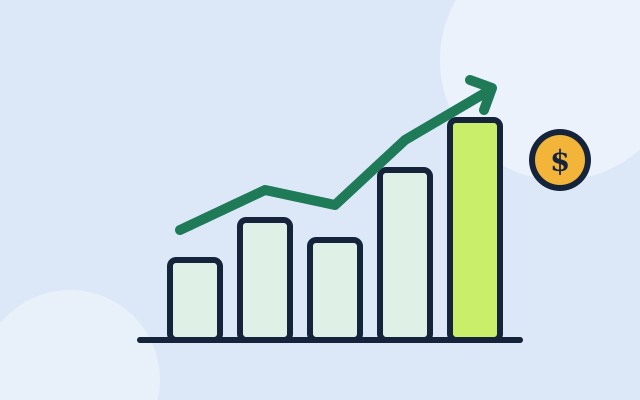
Investing $200 a month for 25 years at a 7% average annual return would grow to about $160,000, of which about $60,000 is your own contributions. Returns aren’t guaranteed and vary year to year, but steady contributions over long periods are powerful. Try your own numbers in our compound interest calculator.
Mistakes to avoid
- Chasing hot stocks or trends you saw online
- Paying high fees for actively managed funds that rarely beat their index after costs
- Stopping contributions when the market drops
- Cashing out a 401(k) when you change jobs instead of rolling it over
Read more in common investing mistakes.
WalletJolly may earn a commission from links on this page. Rates, prices and rules mentioned are current as of Oct. 28, 2026 and can change. This article is general information, not financial, tax, insurance or legal advice.